LETTER TO THE GALATIANS
Introduction to Galatians
INTRODUCTION
Main Issue: How to Live the Christian Life
Too often, Galatians is viewed primarily as the way a person gets saved. Salvation, though, in the sense of getting saved, is not the main point of Galatians. Rather, the point is how the Christian lives his life once he has been saved. But then, why does Paul go into detail about the way a person is saved? Because he is going to assert that the way a Christian is saved is also the way the Christian lives the Christian life. The Christian is saved by faith and therefore must live by faith. Following the Law of Moses doesn't save a person; therefore, following the Law of Moses is not the way a person should live the Christian life. Consistency is going to be key here.
Why is consistency the key? Because of who God is. When we claim that God is faithful, we are actually saying that He is consistent. At present I teach a lot of college students at the local college. Every now and then, one of them will come up and cheerfully inform me that they are bipolar. I step back a little because I don’t know what is coming next. They’ve been kind to me up to this point. Are they going to explode on me the next minute? I am constantly on guard while I am around them because I am unsure as to how they are going to act, no matter how they acted in the past. Well, God is not bipolar; He is consistent. We know and can trust the way He acts because He ALWAYS acts the same way, that is, His character is consistent. Scripture claims, “Jesus Christ is the same yesterday, and today, and forever” (Heb. 13:8). Well, if God chose to save us a certain way, then the way He chose to save us is going to have an impact on the way we live our lives. If we are saved by Law, then we must live the Christian life by Law; if we are saved by God’s grace through our faith, then we will live the Christian life by God’s grace through our faith. This thought underlies Paul's teachings in Galatians.
Historical Situation
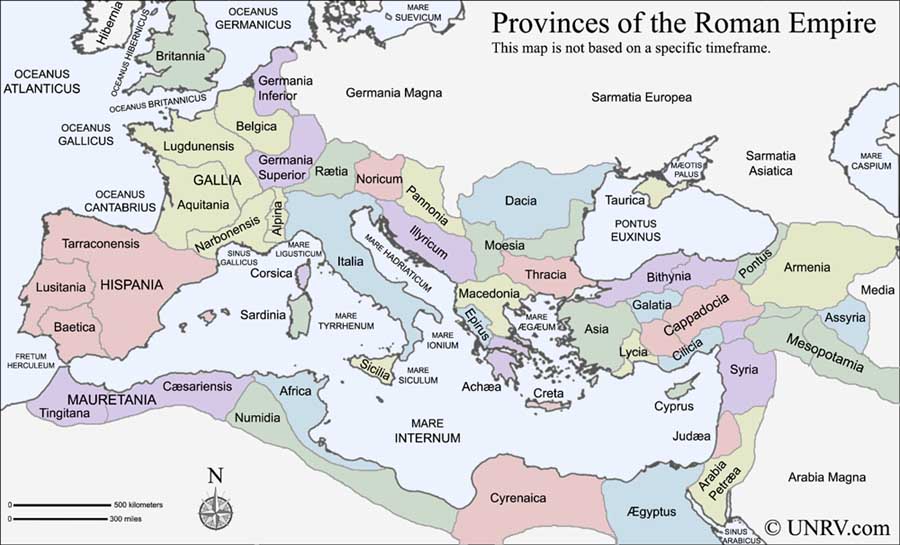
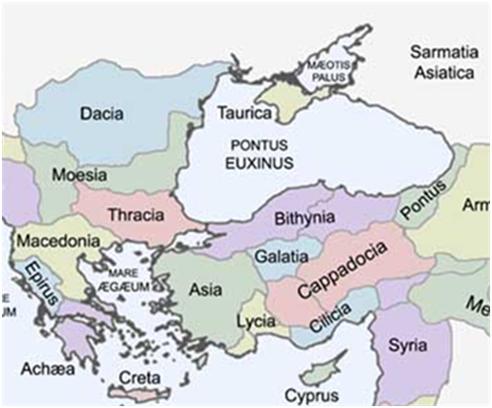
During Paul and Barnabas’ first missionary journey, they established churches in Pisidian Antioch, Iconium, Lystra, and Derbe. Pisidian Antioch fell within the Roman province of Galatia. From this central church would spring satellite churches. (This was part of Paul’s strategy: establish churches in major centers, such as Ephesus, and the let the major centers establish satellite churches.) It is the church at Pisidian Antioch and its satellite churches that Paul is addressing in Galatians. (When you read Acts 13-14, it does not appear that Paul was all that successful in establishing churches in this region; HOWEVER, if you look closely at Acts 14:21-23 you will see that Paul indeed did establish churches there; otherwise, why would he be selecting men to serve as elders in these churches if the churches did not exist?)
Sometime after Paul and Barnabas’ great missionary journey (Acts 13-14) and the Great Church Council in Jerusalem (Acts 15), Paul begins to experience trouble with the churches he and Barnabas founded in Galatia. Judaizers, Christians who not only believed in Jesus for salvation but also emphasized the role of Moses and the Law in Christianity, began to infiltrate the Galatian churches. These Judaizers were declaring that belief in Christ was definitely necessary for salvation; however, according to the Judaizers, belief in Christ was not enough. In addition to believing in Christ, a person also had to keep the Law of Moses, especially circumcision, in order to be saved. “Christ PLUS Moses” or “Christ PLUS the Law of Moses” would have been their slogan or catchphrase.
Method of Attack Used by Paul’s Opponents
How to undermine Paul’s gospel of salvation by God’s grace through faith ALONE? That becomes the primary issue for Paul’s opponents. Paul’s opponents have a 2-pronged attack.
1. Attack Paul’s Apostleship:
The bulk of Galatians 1-2 deals with Paul defending his apostleship. Why was he defending his apostleship? Because it was under attack by his opponents. Why would his opponents attack his apostleship though? Unfortunately for us coming from a Protestant background, we have failed to appreciate the role and status of the apostles in the early church.
First, just look at how important these apostles are to us from a practical standpoint. Because we have nothing from the hand of Jesus, all our knowledge of Jesus comes directly from the apostles.
Second, look at how important these apostles should be to us from Jesus’ point of view and also from the point of view of the apostles themselves.
(This same thought lies behind John’s description of the foundation stones of the New Jerusalem: “And the wall of the city had 12 foundation stones, and on them were the twelve names of the 12 apostles of the Lamb” (Rev. 22:14).
Finally, John claims that in order to have saving fellowship with God, you must also have fellowship with whom else (1 John 1:3)?
Well, it only stands to reason that if Paul is an apostle, then his gospel of salvation by grace through faith alone is true. Paul’s opponents know this; therefore, they attack his claim to be an apostle.
Before going any further, we need to understand the issue of the apostles is not some issue relevant only 2,000 years ago. It is a critical factor in today's discussion on which religion (if any) is true. We as Protestants use as our main weapon of offense and defense the claim that the Bible is God's Word. I believe that claim with all my heart; however, starting off with this claim is not going to win the world for Christ. The reason is that Protestantism was born in a Christian culture (Roman Catholic but nevertheless Christian). Protestantism was trying to reform the Christian church. Catholicism, on the other hand, was born in the fires of a pagan culture. If the early Christians had claimed that the Bible was God's Word, they would have failed to convince anybody to become a Christian because others claimed their own books to be divinely inspired.
The early Christians won the day not only by claiming that Jesus' resurrection proved Him to be God the Son but that there were at least 500 witnesses (many of whom were apostles) who not only claimed that they saw the resurrected Christ but that they were willing to die for this claim. John claims in Rev. 12:11 that the early Christians won the day "because of the word of their testimony and they did not love their life even to death" (spoken of that first-century group of Christians, many of whom had seen the resurrected Jesus). Until we start presenting the same evidence for the truth of Christianity (Jesus' claim to be God the Son, His resurrection witnessed by more than 500 people-the apostles, etc.), we are going to lose the day. What is exciting is that today our Bible can be relevant than ever before because we are now living in almost a duplicate copy of the same society in which the early church was forged.
2. Attack Paul’s Gospel:
Next, Paul’s opponents will attack Paul’s gospel by claiming that it contradicts the Old Testament itself, especially as it relates to Abraham and to circumcision. The Jews rightly believed that the Old Testament was God’s Word. They claimed that Paul’s gospel was not true because it contradicted the OT. Paul will agree with his opponents that the OT is God’s Word and that his gospel must agree with the OT if his gospel is truly from God. Paul will claim that his gospel indeed does contradict something. It’s just that it does not contradict the OT; it contradicts THEIR INTERPRETATION of the OT. The bulk of chapter 3 addresses this issue.